
Reality Drift in Everyday Life
Why so many ordinary tasks now require more steps, more patience, and more work than they used to.

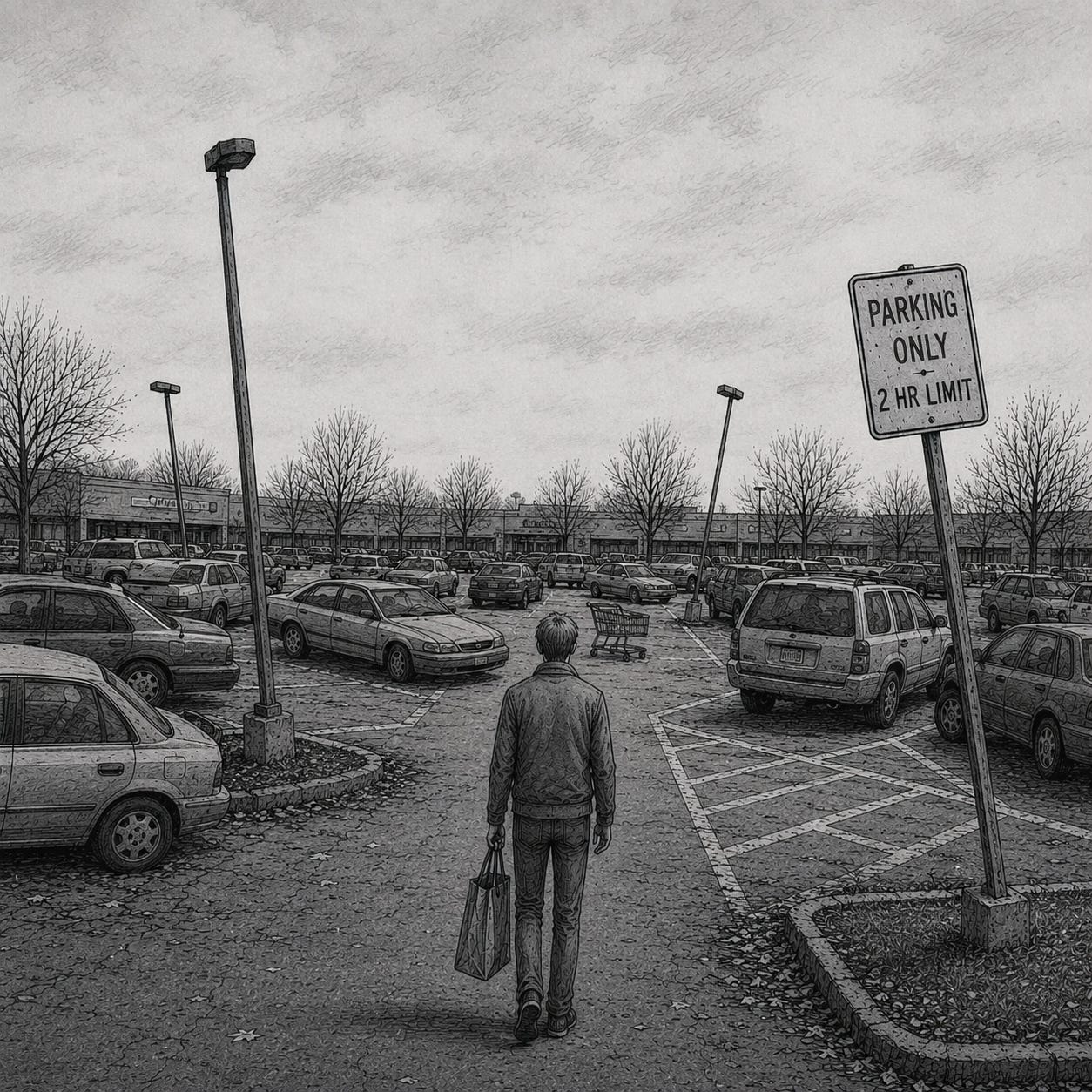
Most modern systems still work, but many ordinary tasks feel harder than they used to. Parking requires apps, purchases come with hidden fees, devices demand setup rituals, and simple choices increasingly involve unnecessary complexity. The task remains recognizable, but the systems surrounding it have drifted further from the human realities they were built to serve.
These shifts are easy to normalize because they rarely look like failure. The system still functions. But over time, the growing friction changes how it feels to move through the world. These are ordinary examples of Reality Drift, where systems remain operational while gradually becoming less aligned with the human realities they were built to serve.
The images that follow document some of those moments.
The Texture of Modern Life
1. Parking by App Only
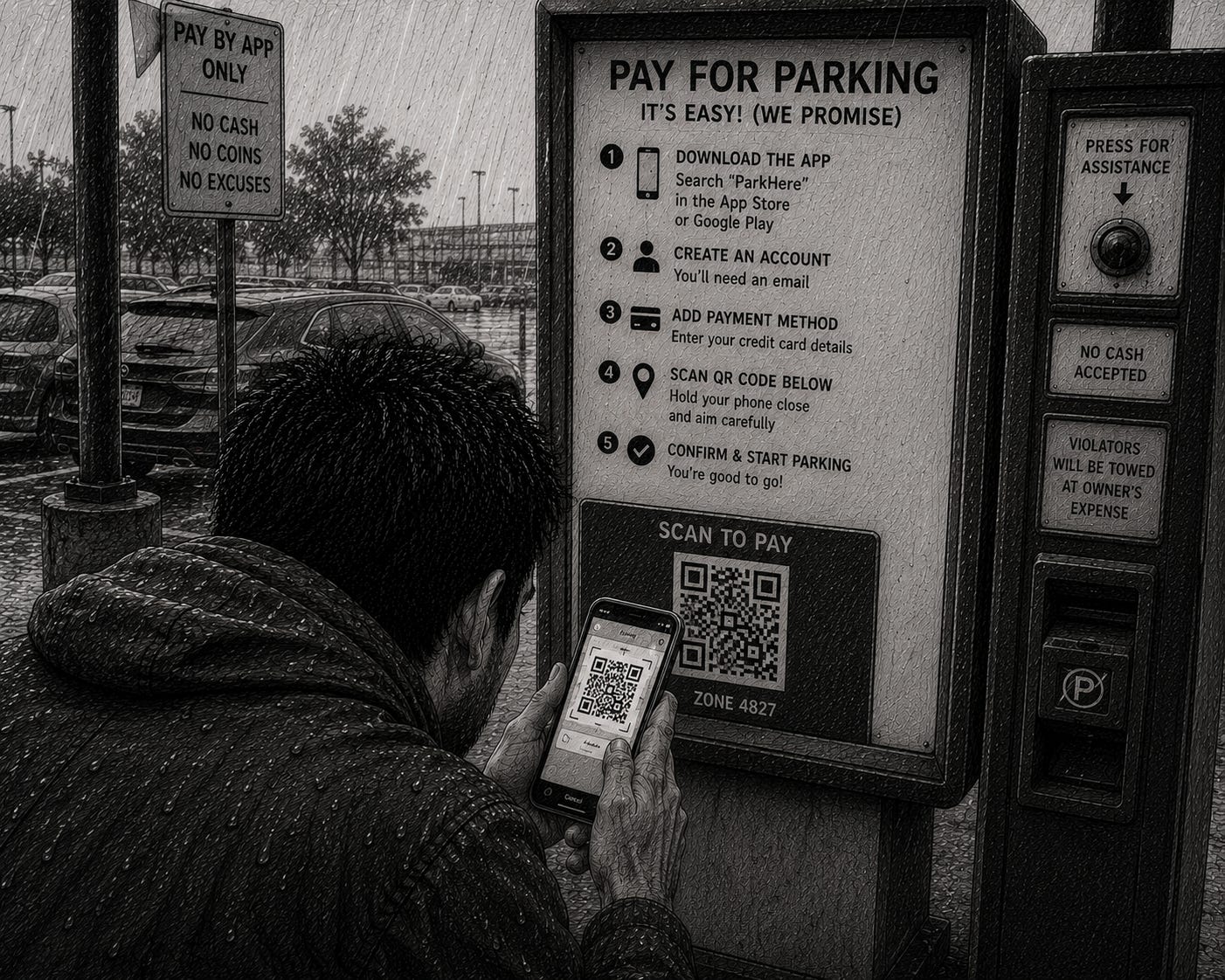
Parking used to be one of the simplest transactions in daily life. Insert coins, take the slip, walk away. Increasingly, that same act now requires scanning a QR code, downloading an app, entering payment details, and navigating a digital payment flow. The act itself has not changed, but getting through it now involves more layers, more decisions, and more friction than it once did.
2. The Hidden Fees Receipt
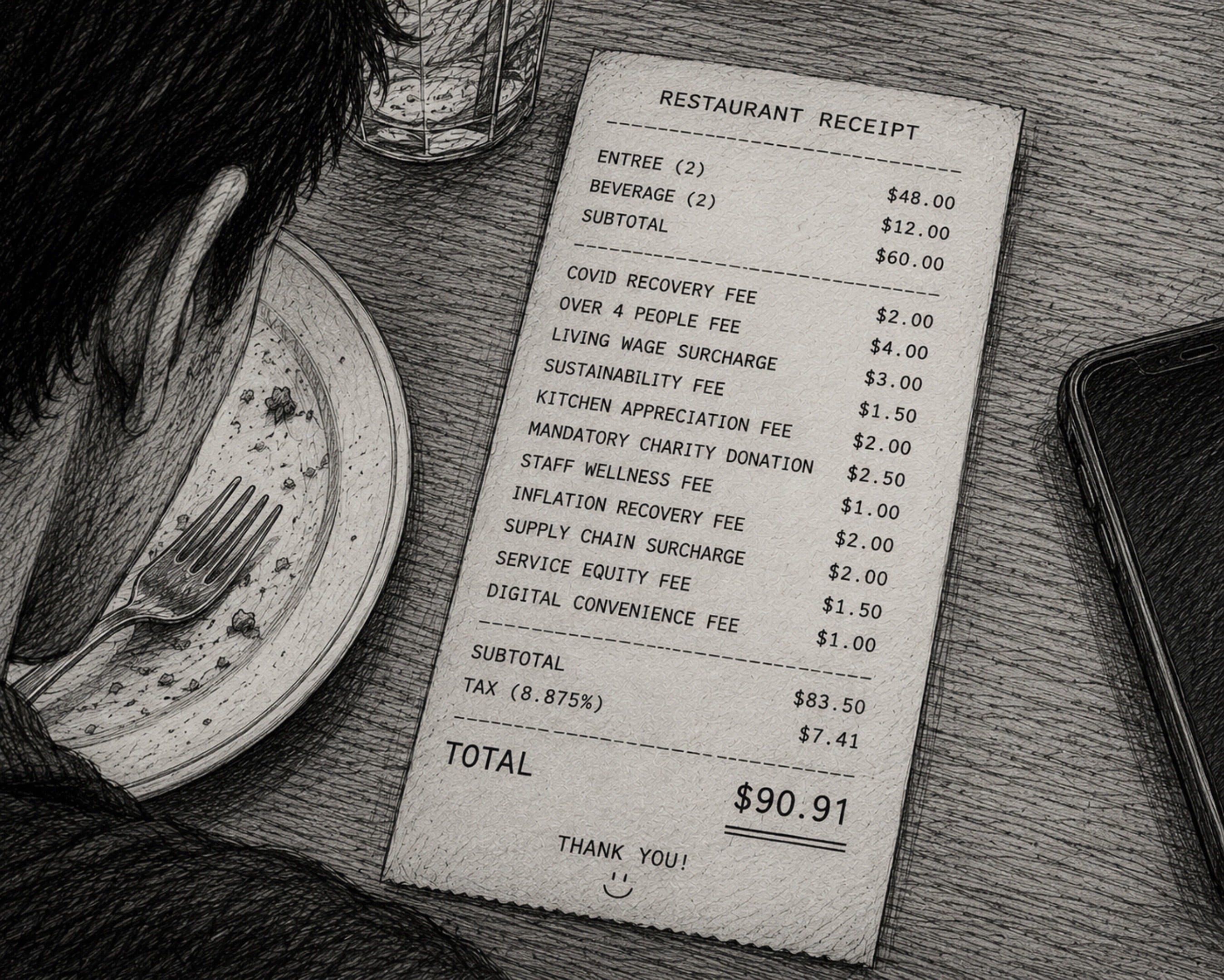
A meal often begins with a clear price and ends with a much less clear bill. Service fees, processing fees, wellness fees, and suggested gratuities appear after the decision has already been made. Each charge is small enough to avoid protest, but together they create a structure where the original transaction becomes harder to understand. The drift here starts to feel cognitive, not only financial. What was once a single price has been fragmented into layers, making clarity itself more difficult to recover.
3. The Tablet Layer
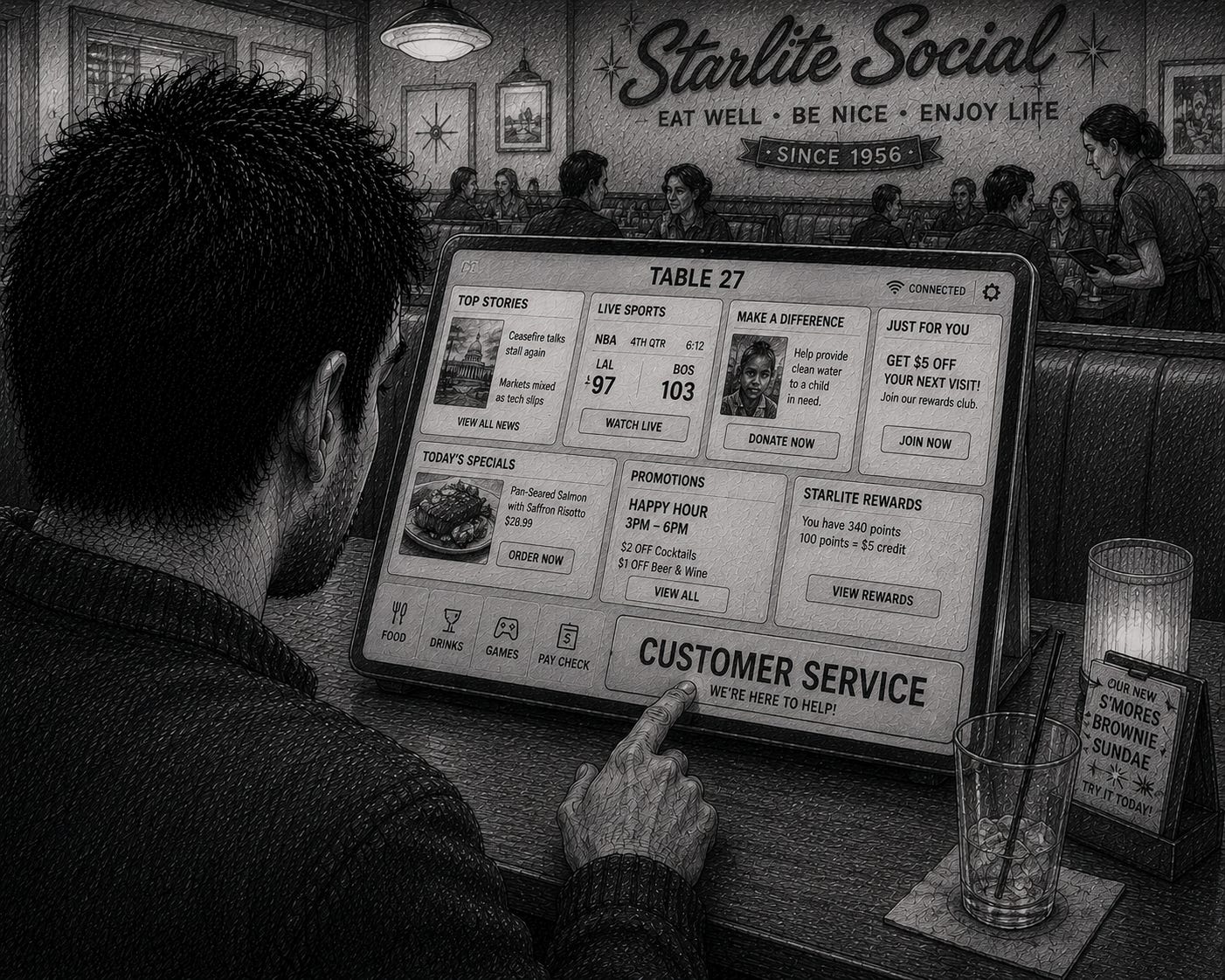
In many restaurants, direct interaction has been replaced by a digital interface. Ordering, paying, reviewing, and tipping are now routed through a screen. What was once a straightforward social exchange now includes prompts, loyalty programs, and recommendations layered into the experience. The meal remains the product, but the interaction surrounding it has become its own system. This is one form of Synthetic Realness, where an experience remains coherent and functional even as it becomes increasingly mediated, engineered, and optimized for engagement.
4. Setup Friction
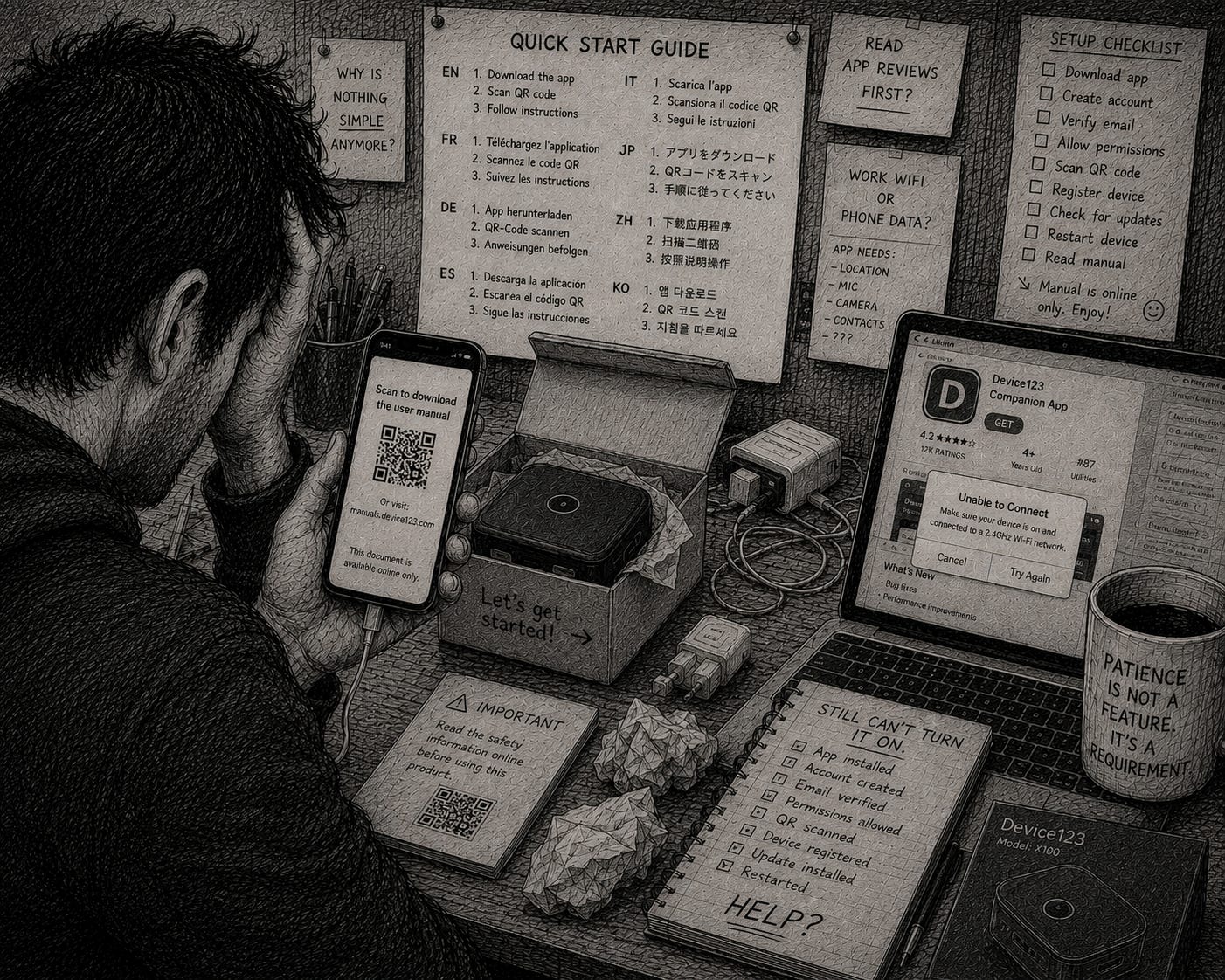
Many devices now arrive with the promise of simplicity but require increasingly complex setup. A product that once worked out of the box now often depends on companion apps, firmware updates, permissions, account creation, and synchronization before it can even be used. Ownership has expanded into ongoing participation in a software ecosystem. This reflects an Optimization Trap, where systems built to increase convenience gradually demand more coordination just to function.
5. Too Many Choices
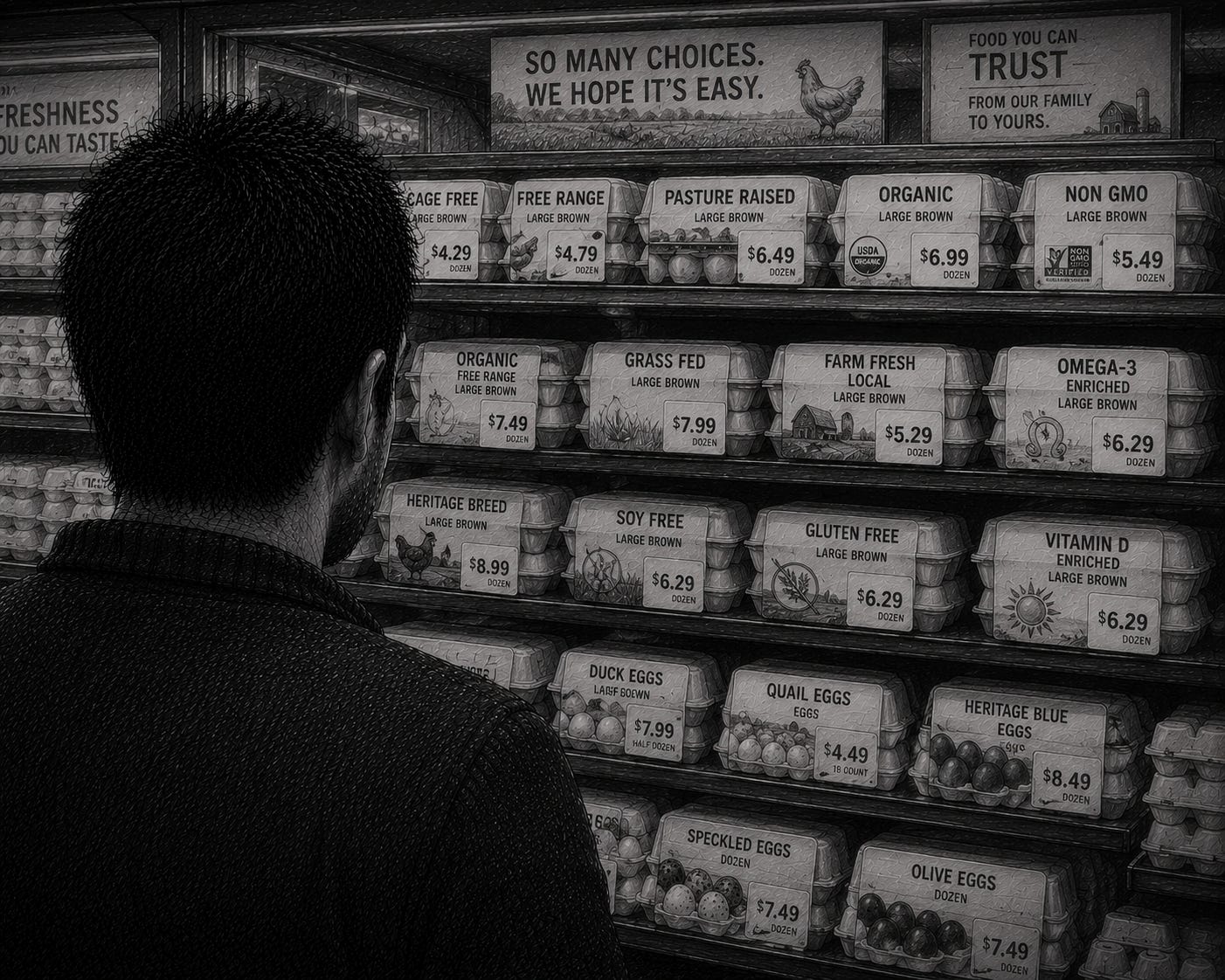
Choice is often framed as freedom, but beyond a certain point it becomes its own burden. In a grocery aisle filled with dozens of nearly identical options, the consumer is asked to process distinctions that are often marginal: organic, pasture-raised, omega-3, cage-free. The sheer volume of differentiation creates a kind of cognitive drag, where more options require more filtering without necessarily improving the decision itself. This is where Filter Fatigue begins, as systems multiply distinctions faster than they create meaningful choice.
6. Care Through Administration
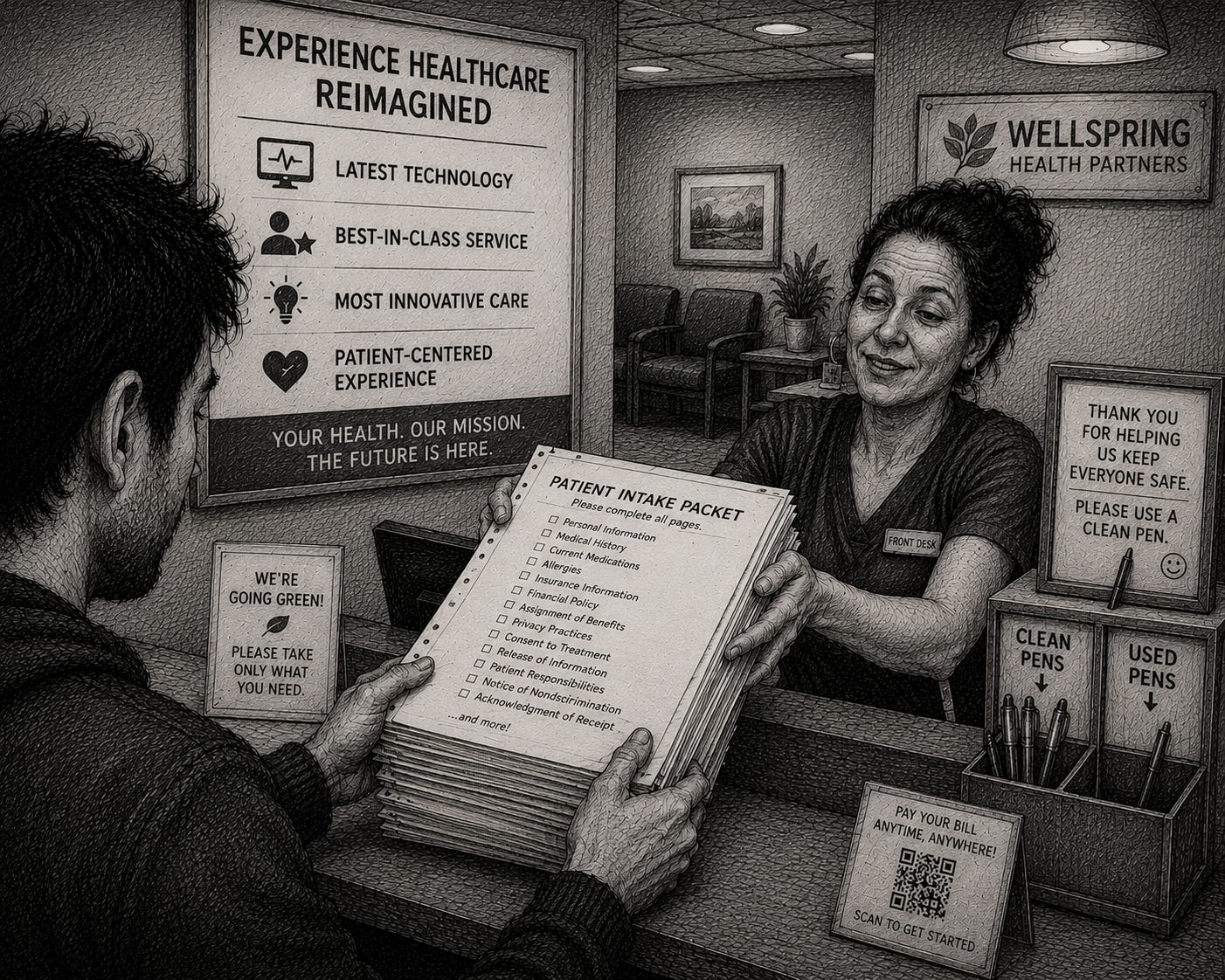
For many people, the first experience of healthcare is no longer treatment but paperwork. Intake forms, insurance verification, privacy acknowledgments, and consent agreements often precede any human interaction related to care. The administrative system introduces itself before the clinical one. This changes the shape of the experience. What should begin with care often begins with bureaucracy, shifting attention away from the person and toward the process.
7. The Illusion of Choice
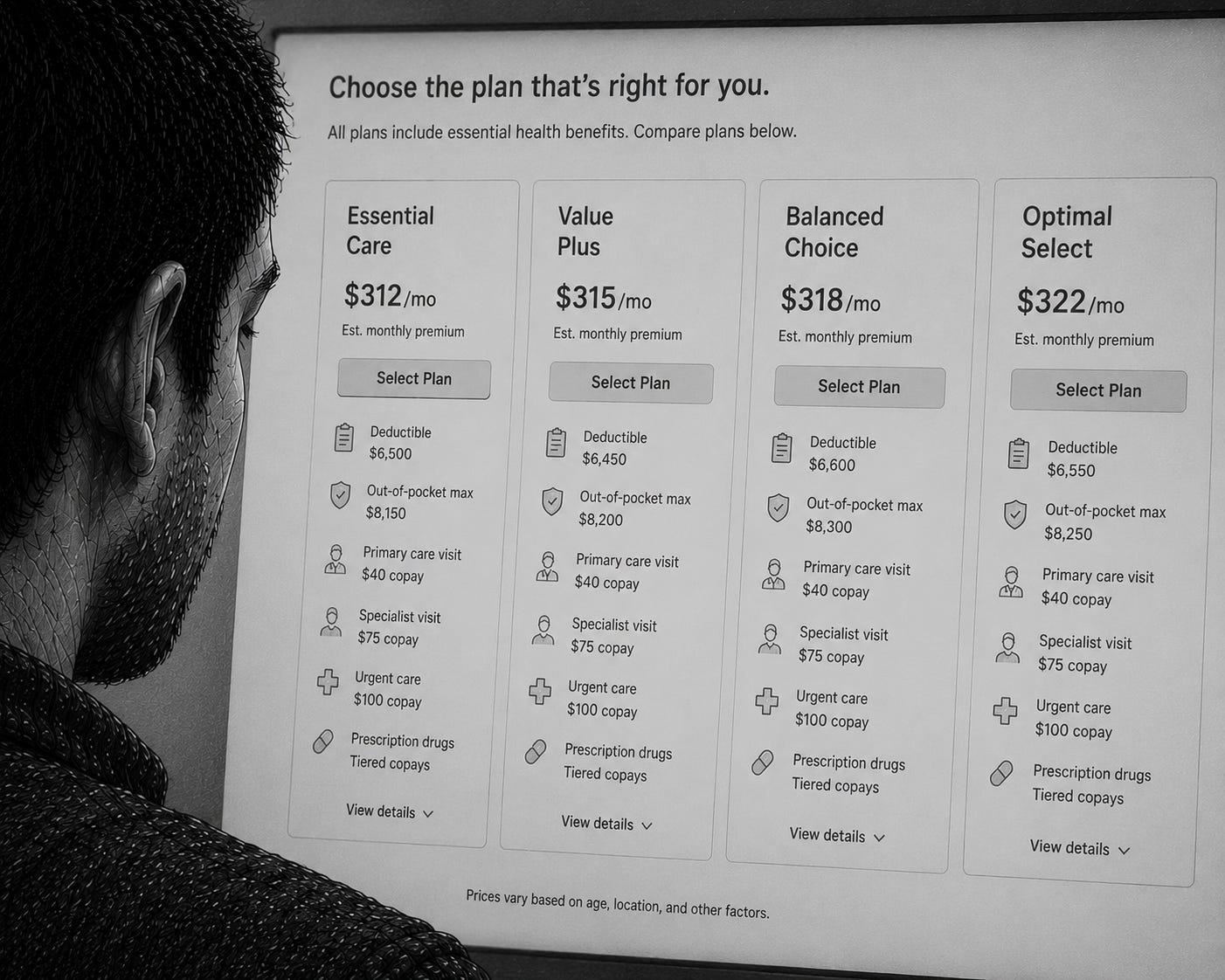
Insurance presents itself as a landscape of meaningful options, but in practice many plans differ in ways that are difficult for most people to interpret. Deductibles, co-pays, network exclusions, and eligibility conditions create a decision environment where comparison becomes labor-intensive. More choices exist, but the burden of making sense of them has shifted almost entirely onto the user. The system offers flexibility while gradually demanding expertise.
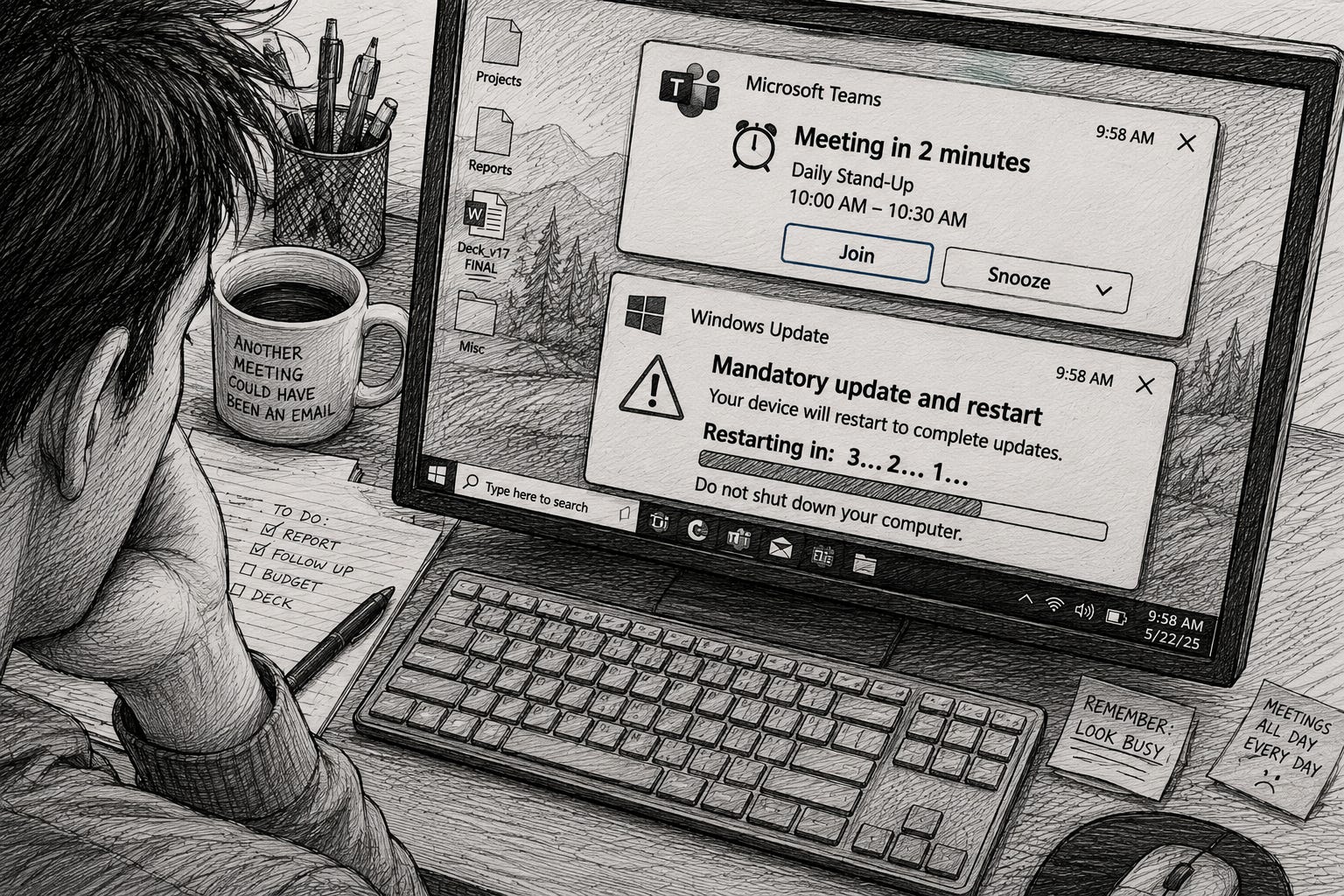
8. When Functioning Systems Clash
Modern work increasingly depends on multiple overlapping systems, each operating according to its own internal logic. A meeting reminder arrives while a mandatory software update interrupts the machine required for that meeting. Both systems are functioning as intended, but their interaction creates friction for the person caught between them. This is one of the most ordinary forms of modern complexity. Not failure, but collision between functioning systems whose timing no longer aligns.
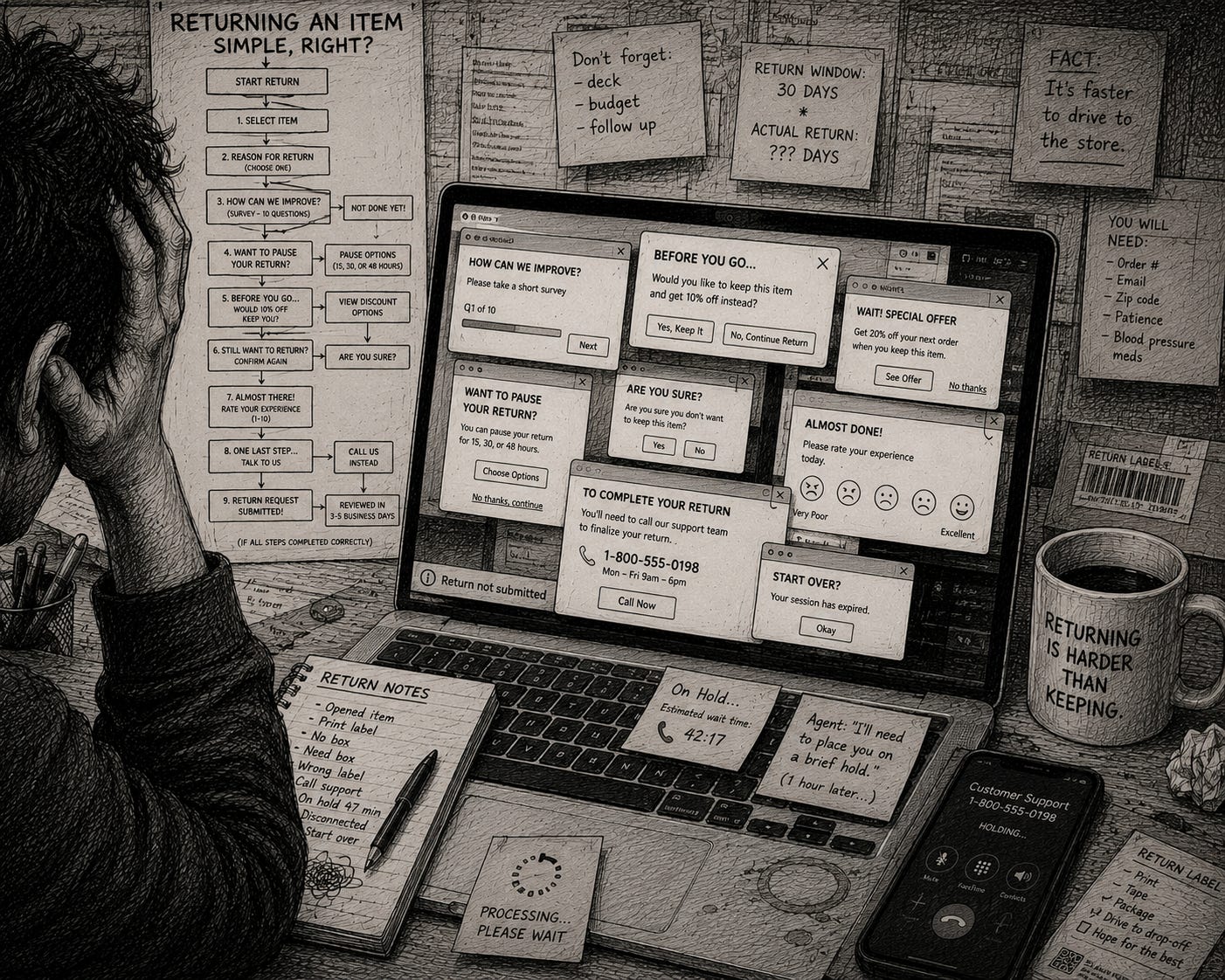
9. The Return Maze
Returning a product has become increasingly procedural. What should be a simple reversal of a purchase now often involves surveys, retention offers, support loops, and repeated confirmations. The action remains technically possible, but the process surrounding it becomes costly in time and attention. In many systems, the difficulty of leaving is part of the design itself.
The Structure Beneath the Friction
None of these examples are dramatic enough to be called failure, which is part of why they matter. They are small, ordinary, and easy to normalize. But over time they accumulate into a broader pattern. More steps, more interfaces, more hidden labor, and more complexity transferred onto the individual.
Together, these scenes point toward something larger. Systems remain operational, often highly optimized, while becoming less aligned with the people moving through them. This is Reality Drift. The gradual weakening of alignment between systems and the realities they were built to serve.
The friction is rarely catastrophic. It is ambient. That is what makes it so easy to miss.
Key Resources
What is Reality Drift? — Short Introduction
A concise overview of the core idea and why modern life feels increasingly misaligned.Reality Drift Canonical Glossary — Core Concepts
Definitions of the key terms used throughout the framework.Optimization Trap — Why Systems Optimize the Wrong Things
How metrics, proxies, and incentives drive systems away from real-world outcomes.Reality Drift — How Systems Lose then Ability to Correct Themselves
Paper describing how modern systems remain operational while gradually losing alignment with real-world feedback and lived experience.The Age of Drift — Book (2025)
A full exploration of the cultural and cognitive implications of Reality Drift.